Artificial Intelligence is No Longer Just Technology. CRA Wants to Help Companies Find the Meaning of AI
.jpg)
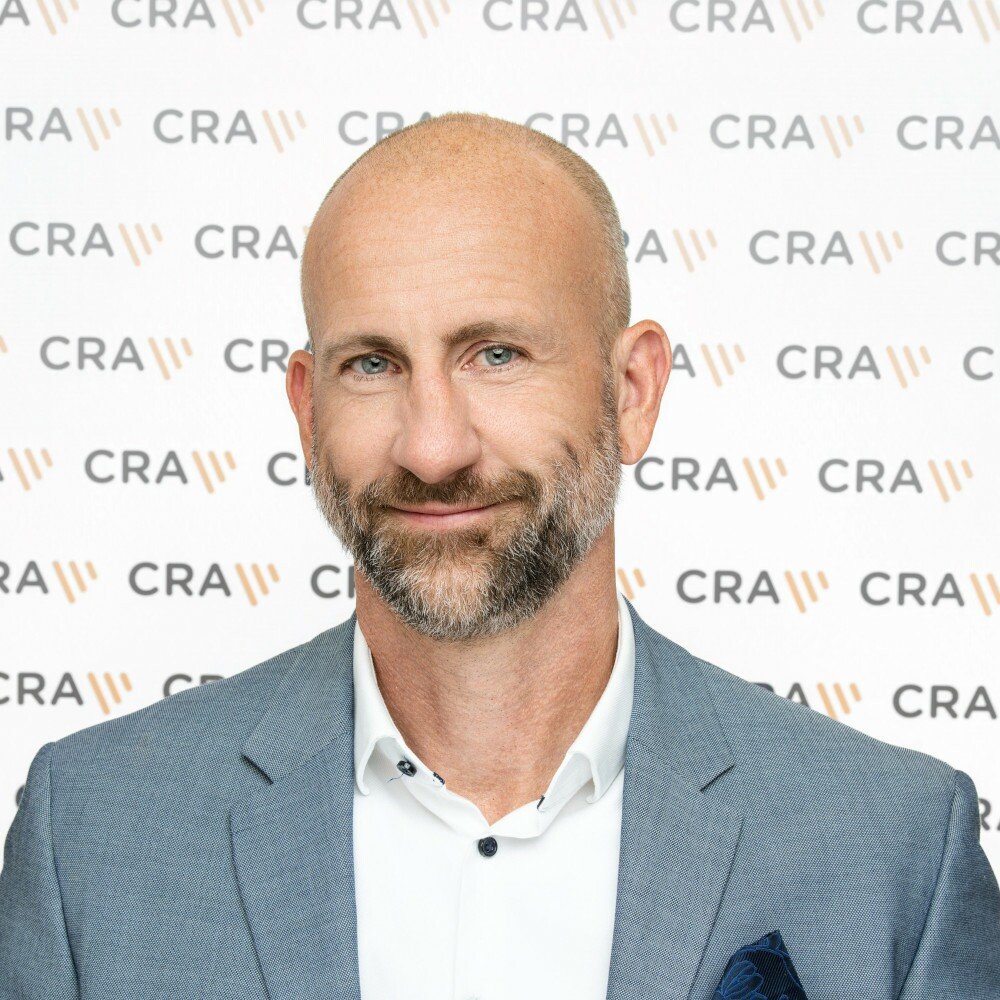
An interview with Ondřej Krumpansl, Head of Corporate Sales at CRA, about how artificial intelligence is changing the perception of working with information from a classic IT conception to an AI one and how CRA is becoming one of the drivers of change.
Artificial intelligence is no longer just another IT service or "answer machine." It is becoming a tool for working with information, analysing complex contexts, and finding solutions in an environment where data is incomplete, fragmented, seemingly unrelated and often chaotic. This is where its real value for companies and institutions lies. Therefore, CRA does not want to offer only performance for AI, but the entire ecosystem – from infrastructure and security to consultation to the ability of AI to actually deploy and operate solutions in the long term.
When talking about AI today, most people still think of a chatbot, an intelligent search engine or a text generator. But does CRA have something broader in mind?
Exactly. AI is no longer just a technology or another cloud service. Today, it is mainly about the ability to work with information, analyse data, look for connections and help people make decisions. And this is a completely different discipline than a classic server or a regular cloud.
So is CRA’s AI Cloud also changing?
Fundamentally. We don't want to be just a company that rents hardware. We want to offer customers the entire AI ecosystem. That means infrastructure, performance, security, connectivity, energy, consulting, and partners who can actually build and operate AI solutions.
That sounds more like an AI system integrator than a traditional data centre operator.
That's really the way it is today. AI is not just another type of software. Companies are very quickly finding out that the operation of modern AI systems is extremely demanding in terms of performance, cooling, electricity or safety. And this is where the advantage of having our own infrastructure, backbone network, data centres and strong energy reserves becomes apparent.
Many companies today use AWS, Azure or Google Cloud. Why should they look for an alternative?
Because they are increasingly needing to deal with things they have never had to before. Data sensitivity, AI legislation, geopolitical risks or very poorly predictable costs. With hyperscalers, you often don't know how high your bill will be based on how much power you are currently consuming. We offer a private AI cloud with a fixed price for the service, including connectivity and electricity.
Energy is another big topic. Is AI really that energy-intensive?
This topic is absolutely crucial in today’s age. Modern DGX or HGX systems have a power consumption that companies are often unable to power or cool in their own server rooms. And the next generations of the Vera Rubin type will be practically only water-cooled systems. We are no longer talking about just one GPU card in a rack. This is infrastructure at a critical scale.
So AI also means a fundamental change in management's thinking?
Yes, because the biggest problem today is not technology. The biggest problem is that companies often don't even know what they could do with AI. They feel that they have to have it because everyone else has it, but they lack a concrete idea. And here, in my opinion, is where the traditional IT mentality clashes with the new AI mentality.
What do you mean by that?
An IT guy would say: it can't be done. A data scientist will say: this is a simple problem. That's exactly the difference. Traditional IT is often overwhelmed with the operation and maintenance of systems. AI specialists, on the other hand, are thinking about how to extract new information from data and how to build new services on top of it that will provide new perspectives and new solutions to problems.
So you don't want to reach out to IT departments?
We primarily want to talk to management and business clients, with people who solve problems or have a vision. And maybe even just a thought. When a hospital, bank, manufacturing company or even a carrier comes to us and tells us what is bothering them, we then prepare a specific use case together with our partners and show them what AI can do.
But CRA does not develop AI models itself, does it?
And we don't want to. Our role is to be the integrator and orchestrator of the entire ecosystem. That's why we work with partners who have expert know-how in specific areas of AI. We deliver robust infrastructure and a safe environment for operation.
So what exactly is your main message towards the market?
That companies not be afraid to come and engage in a non-binding conversation. They do not need to have a finished project or an AI strategy. They just need to have a problem they we solve, and from there we will help them find a way, show the possibilities, and build solutions so that AI makes real sense to them.
Thank you for the interview.